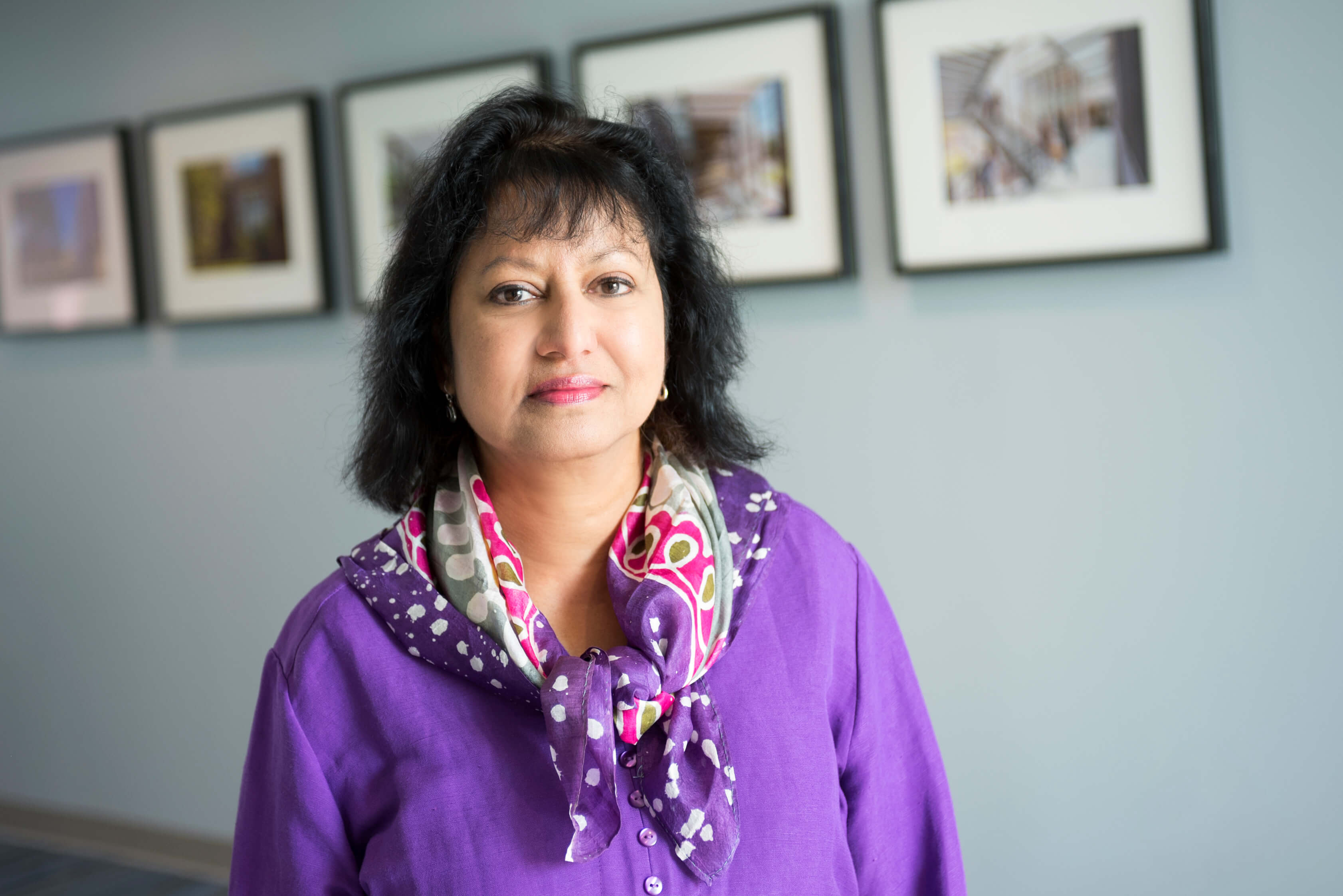
Asma Afsaruddin
Asma Afsaruddin is the Class of 1950 Herman B Wells Endowed Professor and Professor of Middle Eastern Languages and Cultures in the Hamilton Lugar School of Global and International Studies at Indiana University Bloomington. She also serves as adjunct professor in the departments of Religious Studies and Gender Studies there. An internationally recognized scholar of Islamic thought and intellectual history, Professor Afsaruddin’s work spans pre-modern and modern Islamic traditions, women and gender in Islam, Islamic ethics and politics, and contemporary Islamic movements.
Educated at Johns Hopkins University, Professor Afsaruddin has devoted her scholarly career to examining the historical development of major Islamic concepts and institutions within their broader ethical, political, and intellectual contexts. Her work is especially known for challenging reductive modern interpretations of Islam through close engagement with classical Arabic sources, historical methodology, and intellectual history.
Professor Afsaruddin is the author or editor of nine books and more than ninety journal articles and book chapters. Her influential and award-winning Striving in the Path of God: Jihad and Martyrdom in Islamic Thought (Oxford University Press, 2013) offers a historically grounded analysis of jihad and martyrdom in Islamic intellectual traditions and has been translated into Indonesian. Her widely used textbook The First Muslims: History and Memory (Oneworld Publications, 2008) examines the formative period of Islam and has been translated into Turkish, Bahasa Malay, and Bosnian.
Her other major works include Contemporary Issues in Islam (Edinburgh University Press, 2015) and Jihad: What Everyone Needs to Know (Oxford University Press, 2022), which addresses the historical and ethical dimensions of jihad in relation to contemporary political discourse. Her edited volume The Oxford Handbook of Islam and Women (Oxford University Press, 2023) represents a major contribution to the study of women and gender in Islamic societies and is currently being translated into Arabic.
Professor Afsaruddin has held numerous prestigious academic appointments and fellowships. She previously served as the Kraemer Middle East Distinguished Scholar-in-Residence at the College of William and Mary and as a visiting scholar at the Centre for Islamic Studies at the SOAS University of London. Her research has been funded by institutions including the Harry Frank Guggenheim Foundation, the American Research Institute in Turkey, and the Carnegie Corporation of New York, which named her a Carnegie Scholar in 2005.
In recognition of her scholarly and professional accomplishments, Professor Afsaruddin was inducted into the Johns Hopkins Society of Scholars in 2019. She also served as a member of the Board of Directors of the American Academy of Religion, reflecting her longstanding contributions to the academic study of religion and Islamic thought.