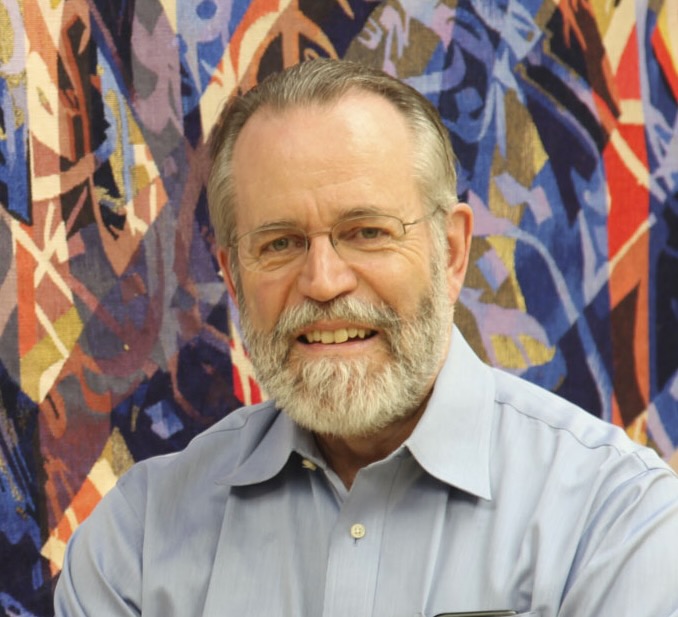
Carl W. Ernst
Carl W. Ernst is William R. Kenan, Jr., Distinguished Professor Emeritus of Religious Studies at the University of North Carolina at Chapel Hill and one of the world’s leading scholars of Islam and Sufism. Through more than four decades of research, teaching, and public scholarship, he has made significant contributions to the study of Islamic intellectual history, Indo-Muslim culture, and the diverse spiritual traditions of the Muslim world.
Educated at Stanford University and Harvard University, where he received his doctorate in the study of religion in 1981, Professor Ernst began his academic career at Pomona College before joining the University of North Carolina at Chapel Hill in 1992. Over the course of his distinguished career, he has trained generations of students while producing a substantial body of scholarship grounded in the study of Arabic, Persian, and Urdu sources.
Professor Ernst’s research has focused primarily on three interrelated fields: critical approaches to Islamic studies, premodern and contemporary Sufism, and the intellectual and cultural traditions of South Asian Islam. His work has consistently challenged reductive and essentialist portrayals of Islam, emphasizing instead the historical diversity, intellectual sophistication, and cultural complexity of Muslim societies. Through both scholarly and public-facing publications, he has played an important role in reshaping contemporary understandings of Islam in academic and popular contexts alike.
A major theme of Professor Ernst’s scholarship has been the study of Sufism as both an intellectual and spiritual tradition. His influential books on Sufi thought, practice, and literature have helped make the writings of major Muslim mystics accessible to broader audiences while maintaining the historical and textual rigor required by serious scholarship. His work has been particularly important in demonstrating the central role of Sufism within Islamic civilization rather than treating it as a marginal or isolated phenomenon.
Professor Ernst has also made major contributions to the study of Indo-Muslim culture and cross-cultural exchange. His research explores the rich interactions between Islamic and South Asian intellectual traditions, illuminating the ways in which Muslim scholars, poets, and mystics engaged with diverse cultural environments. More recently, his work has expanded to include studies of slavery, translation, embodiment, and religious practice across the Islamic world and its global connections.
Among his many publications are Following Muhammad: Rethinking Islam in the Contemporary World, The Shambhala Guide to Sufism, Eternal Garden: Mysticism, History, and Politics at a South Asian Sufi Center, Hallaj: Poems of a Sufi Martyr, I Cannot Write My Life: Islam, Arabic, and Slavery in Omar ibn Said's America (with Mbaye Lo), and Breathtaking Revelations: The Science of Breath, from the Fifty Kamarupa Verses to Hazrat Inayat Khan (with Patrick d'Silva). His translation of Hallaj: Poems of a Sufi Martyr received the inaugural Global Humanities Translation Prize, while I Cannot Write My Life received the 2024 Award for Excellence in Religious Studies from the American Academy of Religion.
Professor Ernst's scholarship has been recognized through numerous prestigious honors, including fellowships from the Fulbright Program, the National Endowment for the Humanities, the John Simon Guggenheim Foundation, and election as a Fellow of the American Academy of Arts and Sciences. His work continues to shape contemporary discussions concerning Islam, Sufism, religious diversity, and cross-cultural understanding.
At Tokat, he lectures on Islam and Sufism as living intellectual and spiritual traditions, guiding students through the texts, practices, and historical experiences that have shaped Muslim civilizations across the world.