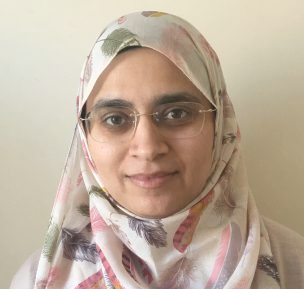
Farah Ahmed is Assistant Research Professor in the Faculty of Education and Research Fellow at Hughes Hall, University of Cambridge. Her research focuses on the intersections of dialogic education, philosophies of Islamic education, Southern theory, critical and indigenous research methodologies, and questions of identity, personhood, and character education. Dr. Ahmed serves on the steering committee of the Cambridge Educational Dialogue Research (CEDiR) Group and is a member of the T-SEDA team and the Camtree Development Advisory Group, where she contributes to initiatives supporting teacher-led professional inquiry and research exchange. She also founded an online platform dedicated to supporting teacher inquiry and professional development in Islamic educational contexts and co-convenes the “Cultural, Religious, and Philosophical Traditions in Educational Dialogue” strand of the Cambridge Educational Dialogue Research Group. With more than twenty-five years of experience teaching in and leading Islamic schools in the United Kingdom, Dr. Ahmed brings extensive expertise in curriculum development, teacher education, and the theory and practice of Islamic education.

Seyyed Hossein Nasr is one of the world’s foremost authorities on Islamic intellectual and spiritual history. The first non-Western philosopher to give the Gifford Lectures, he has devoted sixty years to the recovery and transmission of the Islamic intellectual tradition. At Tokat, he teaches what cannot be found in any other living classroom.
Seyyed Hossein Nasr was born in Tehran in 1933 and educated in the United States, completing a doctorate in the history of science and learning at Harvard in 1958. He returned to Iran to teach at the University of Tehran and became president of the Iranian Academy of Philosophy before leaving the country in 1979.
Nasr’s scholarship spans Islamic philosophy, cosmology, and the history of science — but at its centre is a sustained argument that the Islamic intellectual tradition offers a coherent and living alternative to the dominant assumptions of modern Western thought.
He has written more than fifty books — among them Ideals and Realities of Islam, Knowledge and the Sacred, and Islamic Philosophy from its Origin to the Present. He is one of the few living scholars whose work belongs simultaneously to philosophy, religious studies, and the history of science.
At Tokat, Professor Nasr teaches what cannot be transmitted through books alone: the questions, the method of approach, and the felt sense of what Islamic metaphysics is asking.
An eight-week inquiry into being, knowledge, and existence as understood through the Islamic intellectual tradition — from Ibn Sina and Mulla Sadra to the living present. Not a survey. A sustained encounter with the deepest questions the tradition has asked.
An eight-week inquiry into being, knowledge, and existence as understood through the Islamic intellectual tradition. Not a survey. A sustained encounter with the deepest questions the tradition has asked.
This archive is available to Associate members. Scholar Notes, Deep Dives, and the full lecture library — included at $99 / year.
Become an AssociateThis archive is available to Associate members. Scholar Notes, Deep Dives, and the full lecture library — included at $99 / year.
Become an Associate