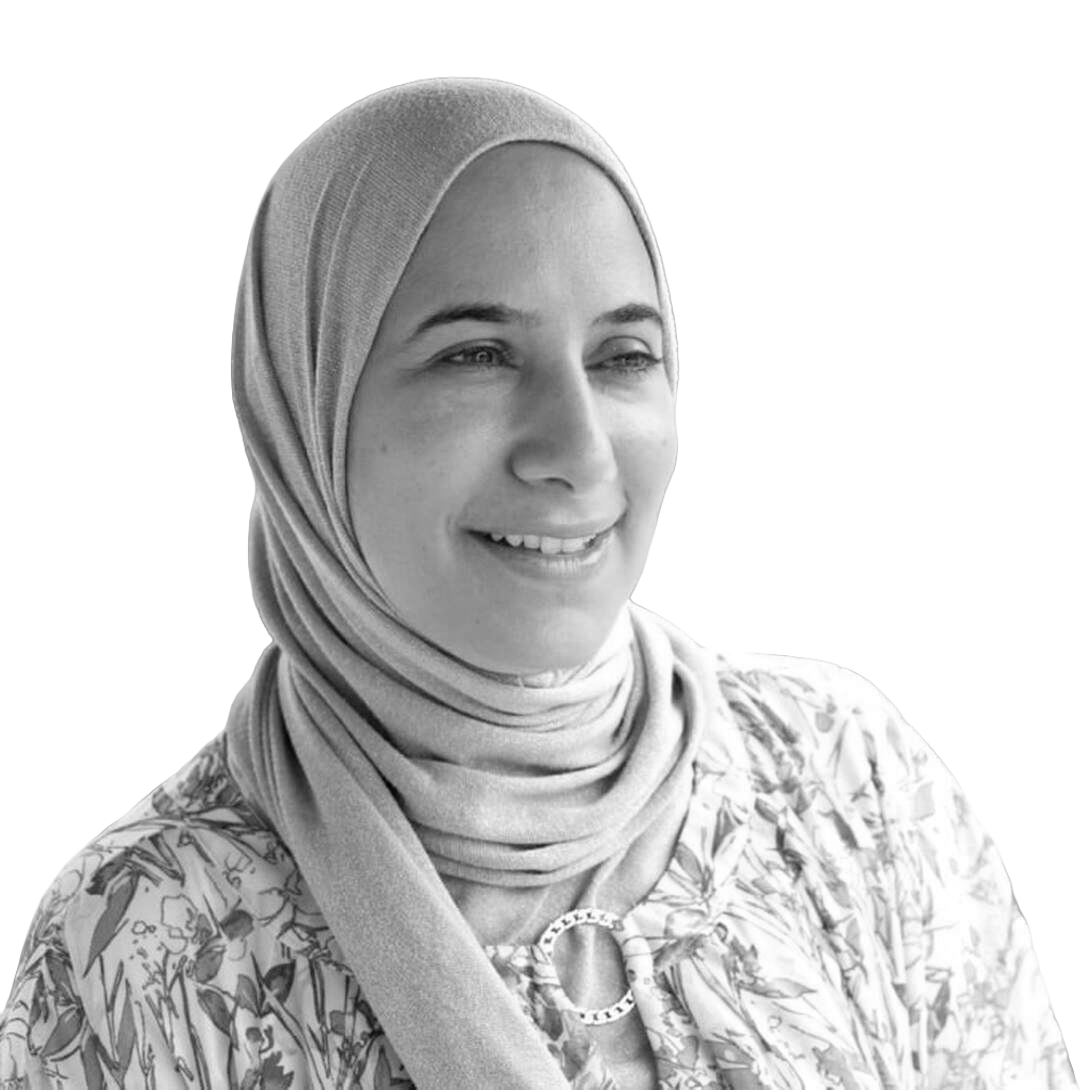
Hadia Mubarak is Associate Professor of Religion at Queens University of Charlotte, where she teaches courses on Islam, comparative scriptures, women and gender in the Muslim world, the history of Islam in America, and religious representation in popular culture, among other courses. She previously served as Assistant Professor of Religious Studies at Guilford College (2018-2020) and as a Research Fellow at New York University-Abu Dhabi (NYUAD)’s Institute in the Humanities (2017-2018). Mubarak completed her Ph.D. in Islamic Studies from Georgetown University, where she specialized in modern and classical Qurʾanic exegesis, Islamic feminism, and gender reform in the modern Muslim world. She currently serves as a scholar-in-residence with the Muslim Community Center of Charlotte (MCC), a Board of Advisors member with the Carleton Center for the Study of Islam (CCSI), and a scholar with the Institute for Social Policy and Understanding (ISPU). Her new book, Rebellious Wives, Neglectful Husbands: Controversies in Modern Qurʾanic Commentaries (Oxford University Press, 2022), explores significant shifts in modern Qurʾanic commentaries on the subject of women against the backdrop of broader historical, intellectual and political developments in twentieth-century North Africa.

Seyyed Hossein Nasr is one of the world’s foremost authorities on Islamic intellectual and spiritual history. The first non-Western philosopher to give the Gifford Lectures, he has devoted sixty years to the recovery and transmission of the Islamic intellectual tradition. At Tokat, he teaches what cannot be found in any other living classroom.
Seyyed Hossein Nasr was born in Tehran in 1933 and educated in the United States, completing a doctorate in the history of science and learning at Harvard in 1958. He returned to Iran to teach at the University of Tehran and became president of the Iranian Academy of Philosophy before leaving the country in 1979.
Nasr’s scholarship spans Islamic philosophy, cosmology, and the history of science — but at its centre is a sustained argument that the Islamic intellectual tradition offers a coherent and living alternative to the dominant assumptions of modern Western thought.
He has written more than fifty books — among them Ideals and Realities of Islam, Knowledge and the Sacred, and Islamic Philosophy from its Origin to the Present. He is one of the few living scholars whose work belongs simultaneously to philosophy, religious studies, and the history of science.
At Tokat, Professor Nasr teaches what cannot be transmitted through books alone: the questions, the method of approach, and the felt sense of what Islamic metaphysics is asking.
An eight-week inquiry into being, knowledge, and existence as understood through the Islamic intellectual tradition — from Ibn Sina and Mulla Sadra to the living present. Not a survey. A sustained encounter with the deepest questions the tradition has asked.
An eight-week inquiry into being, knowledge, and existence as understood through the Islamic intellectual tradition. Not a survey. A sustained encounter with the deepest questions the tradition has asked.
This archive is available to Associate members. Scholar Notes, Deep Dives, and the full lecture library — included at $99 / year.
Become an AssociateThis archive is available to Associate members. Scholar Notes, Deep Dives, and the full lecture library — included at $99 / year.
Become an Associate