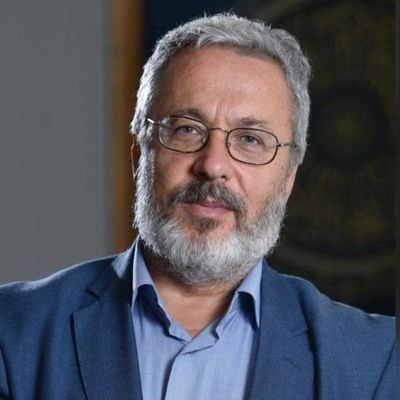
Mahmut Erol Kılıç
Mahmut Erol Kılıç is Professor of Sufism and Islamic Philosophy at Üsküdar University’s Institute for Sufi Studies and Director General of the Research Centre for Islamic History, Art and Culture (IRCICA), one of the world’s leading institutions dedicated to the preservation and study of Islamic civilization. Widely recognized as one of Türkiye’s foremost scholars of Islamic spirituality, his work has contributed significantly to contemporary understanding of Sufism, Islamic philosophy, and the intellectual heritage of the Muslim world.
Educated in Türkiye and deeply rooted in both the scholarly and spiritual traditions of Islam, Professor Kılıç has devoted much of his academic career to the study of Islamic metaphysics, mysticism, and the writings of Muḥyī al-Dīn Ibn ʿArabī. His scholarship combines close engagement with classical Islamic sources and an appreciation of the enduring relevance of spiritual traditions in contemporary life. Through his books, articles, and lectures, he has introduced broad audiences to the richness of Islamic intellectual and contemplative traditions.
A major focus of Professor Kılıç’s work has been the study of Ibn ʿArabī and the Akbarian tradition. His writings explore themes such as divine unity, human perfection, cosmology, symbolism, and spiritual realization, helping to make one of Islam’s most profound intellectual traditions accessible to contemporary readers. He has also contributed substantially to the study of Ottoman Sufism and the role of spiritual institutions in shaping Islamic civilization.
Beyond his academic career, Professor Kılıç has played a prominent role in cultural diplomacy and international relations. He served as Ambassador of the Republic of Türkiye to Indonesia and has represented Türkiye in a variety of international cultural and diplomatic initiatives. His unique combination of scholarly expertise and public service has enabled him to promote dialogue and mutual understanding across cultural, religious, and national boundaries.
As Director General of IRCICA, Professor Kılıç oversees major international projects devoted to the study, preservation, and dissemination of Islamic history, art, and culture. Under his leadership, the institution has continued its longstanding mission of fostering scholarly collaboration and preserving the cultural heritage of Muslim societies around the world.
Professor Kılıç’s writings on Islamic spirituality, Ibn ʿArabī, and Ottoman intellectual history have received numerous awards and attracted widespread attention both within Türkiye and internationally. His work is distinguished by its ability to connect classical Islamic wisdom with contemporary concerns while remaining faithful to the intellectual and spiritual integrity of the tradition.
At Tokat, he lectures on Sufism as living paths of wisdom and self-transformation, guiding students through the metaphysical, ethical, and spiritual teachings that have shaped Islamic civilization for centuries.