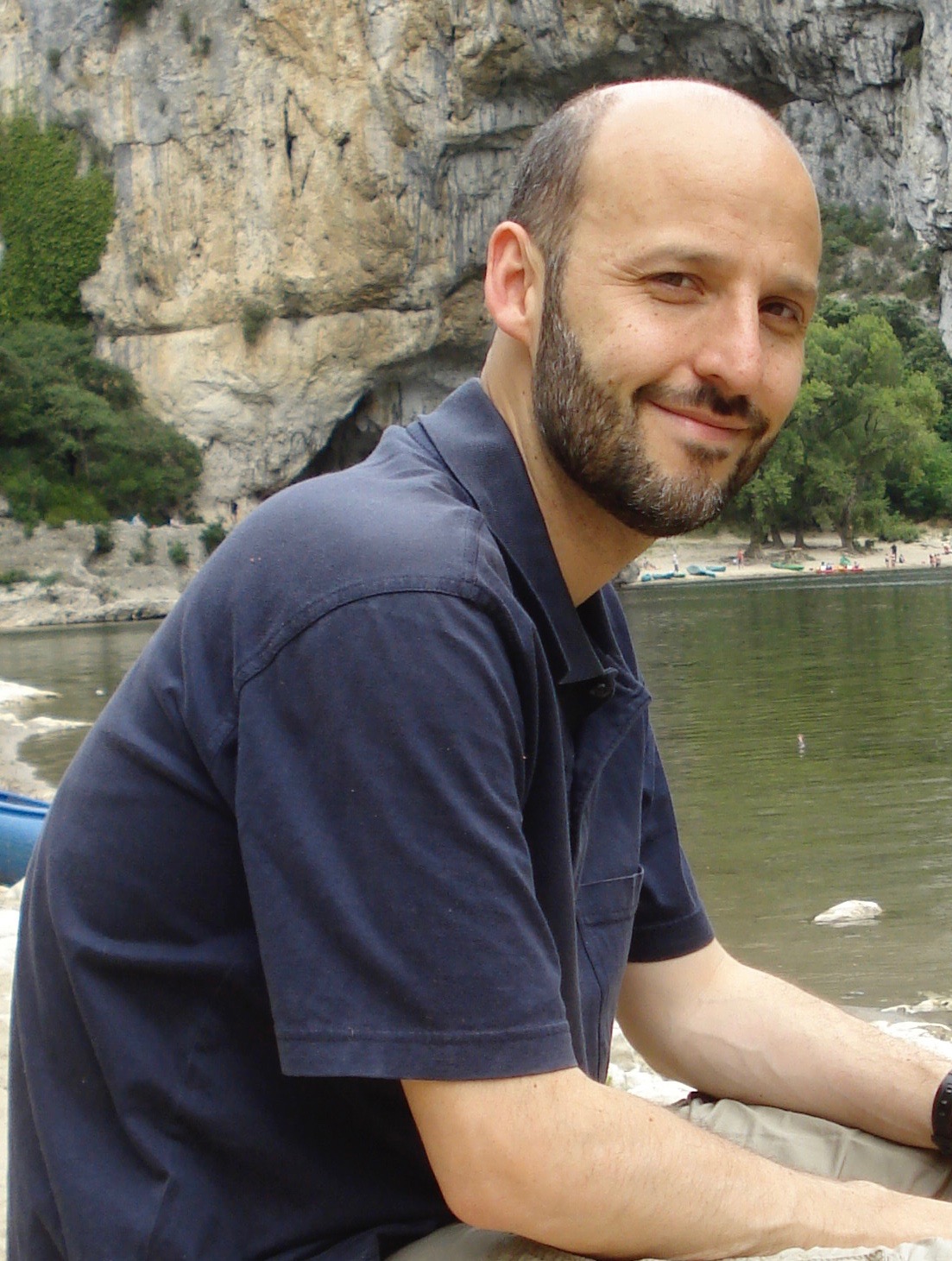
Peter Adamson
Peter Adamson is Professor of Late Ancient and Arabic Philosophy at LMU Munich and Professor of Ancient and Medieval Philosophy at King's College London. A leading historian of philosophy whose work encompasses Greek, Islamic, medieval, and global philosophical traditions, Professor Adamson is internationally recognized both for his scholarly contributions and for his pioneering public engagement with philosophy through digital media and publishing.
Educated at Williams College and the University of Notre Dame, Professor Adamson specializes in ancient philosophy, philosophy in the Islamic world, Neoplatonism, and medieval thought. His scholarship is distinguished by its commitment to presenting philosophy as a continuous and interconnected intellectual tradition that transcends geographical, linguistic, and religious boundaries. Through both his academic writing and public-facing work, he has consistently sought to expand the philosophical canon beyond narrowly Eurocentric narratives.
Professor Adamson is the author of major studies including Al-Kindī and al-Rāzī in the “Great Medieval Thinkers” series, as well as The Arabic Plotinus: A Philosophical Study of the Theology of Aristotle. He has also edited and co-edited numerous influential scholarly volumes, including The Cambridge Companion to Arabic Philosophy and Interpreting Avicenna: Critical Essays, both of which have become foundational works in the study of Islamic philosophy.
He is perhaps best known globally as the creator and host of the enormously influential History of Philosophy Without Any Gaps project, a podcast and book series that presents the history of philosophy as a comprehensive and continuous story stretching across ancient Greece, the Islamic world, medieval Europe, India, China, and Africana traditions. Since its launch in 2010, the project has reached millions of listeners worldwide and transformed public engagement with philosophy by combining scholarly rigor with accessibility and intellectual breadth.
The podcast series later developed into a major multi-volume publication project with Oxford University Press, including volumes on classical philosophy, philosophy in the Islamic world, Indian philosophy, Byzantine thought, Africana philosophy, and medieval philosophy. His work has consistently emphasized the importance of understanding philosophy in multicultural and historical perspective.
In addition to his scholarly publications, Professor Adamson is a frequent contributor to public intellectual life through lectures, broadcasts, and interviews. He has appeared regularly on BBC Radio and other international media platforms discussing ancient, medieval, and Islamic philosophy.
At Tokat, he teaches the history of Islamic philosophy not as an isolated academic discipline, but as a living tradition that stretches across cultures, languages, and civilizations.