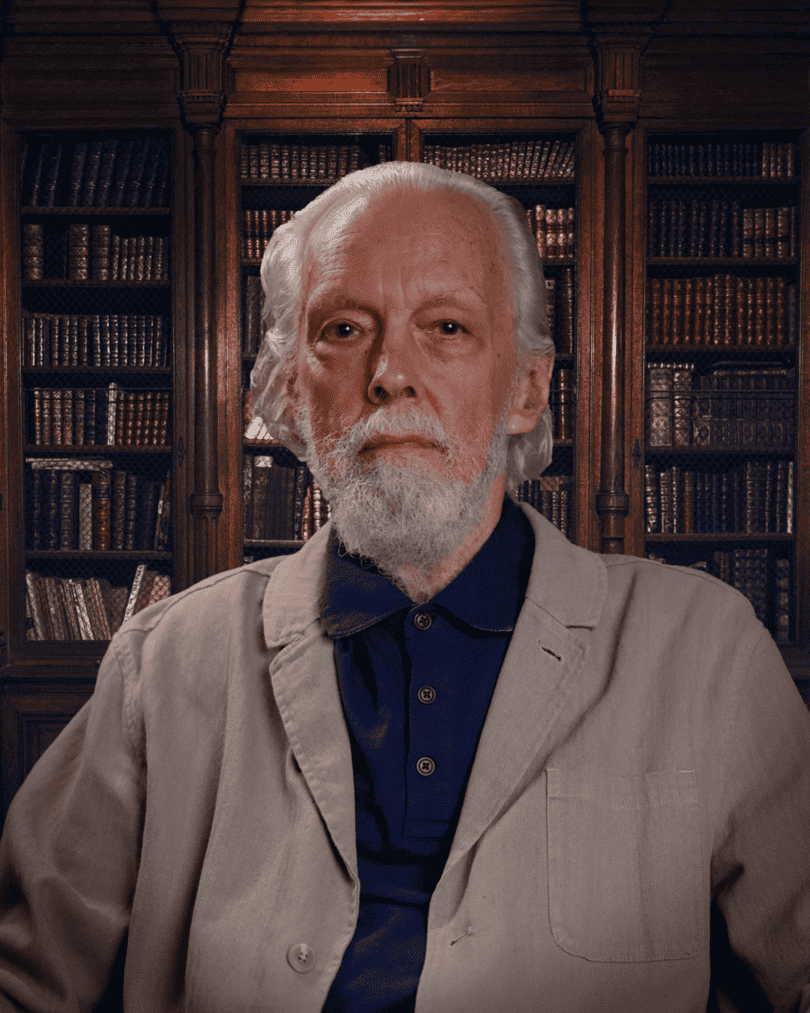
William Chittick
William C. Chittick is SUNY Distinguished Professor in the Department of Asian and Asian American Studies at Stony Brook University and one of the most influential scholars of Sufism and Islamic philosophy in the contemporary world. Through his translations, monographs, and studies of classical Islamic texts, he has transformed the study of Islamic intellectual history and introduced countless readers to the richness of the Islamic spiritual and philosophical tradition.
Educated at the College of Wooster and Tehran University, where he completed his doctoral studies under the renowned philosopher and scholar Seyyed Hossein Nasr, Professor Chittick developed a lifelong engagement with the intellectual traditions of Islam. His scholarship combines philological precision with philosophical depth, making some of the most complex texts of the Islamic tradition accessible to modern readers while preserving their intellectual sophistication and spiritual power.
Professor Chittick is especially renowned for his work on Ibn ʿArabī, the great Andalusian mystic and metaphysician whose writings have profoundly shaped Islamic spirituality and philosophy. His landmark study The Sufi Path of Knowledge: Ibn al-ʿArabī's Metaphysics of Imagination remains one of the most influential introductions to Ibn al-ʿArabī's thought in any language. Together with numerous translations and studies, this work helped establish Ibn al-ʿArabī studies as a major field of scholarly inquiry in the English-speaking world.
In addition to his contributions to Ibn al-ʿArabī scholarship, Professor Chittick has published extensively on Jalāl al-Dīn Rūmī, Islamic cosmology, metaphysics, and the philosophical traditions of Persia. His books The Sufi Path of Love, The Self-Disclosure of God, The Heart of Islamic Philosophy, and Divine Love have become standard references for students and scholars seeking to understand the intellectual and spiritual dimensions of Islam.
The author, translator, and editor of dozens of books and hundreds of articles, Professor Chittick’s work has been translated into numerous languages and continues to influence scholars across the fields of religious studies, philosophy, Islamic studies, and comparative mysticism. Few contemporary scholars have done more to make the intellectual and spiritual heritage of Islam accessible to a global audience.
At Tokat, he teaches Sufism and Islamic philosophy as living traditions of wisdom, guiding students through the writings of Islam's greatest sages while exploring enduring questions concerning selfhood, love, knowledge, and the nature of reality.